
Best Fantasy Books of All Time
 DA
DAEvery "best fantasy books" list on the internet looks the same. Tolkien at the top, a few safe classics in the middle, and whatever came out last month tacked on at the end to seem current. We wanted to do something different. This list spans seventy years of fantasy fiction, from the genre's foundational texts to books published in the last two years. It includes high fantasy and dark fantasy, romantasy and magical realism, 100-page fables and 1,000-page doorstoppers. Some of these books are taught in universities. Some of them are passed around in group chats with a "trust me, just read it" attached. The only thing they have in common is that readers keep coming back to them, keep rating them highly, and keep recommending them to anyone who will listen. We left out novellas, media tie-ins, and anything that felt more like hype than substance. If your favorite is missing, it might just need more time to prove itself.
How We Chose These Books
We read a lot of fantasy. Between the team and our community, we have collectively worked through hundreds of titles across every subgenre, era, and tone the genre has to offer. This list was built by combining editorial judgment with real reader consensus. Every book here holds a rating of 4.0 or above across multiple reader platforms. We required a meaningful volume of reviews to filter out recency bias and niche hype. From a long list of around 40 contenders, we trimmed to 20 by enforcing a few rules: no more than two books per author, a spread across at least five subgenres, and representation from at least five decades of publication. We also made sure to balance the canon (the books every list includes for good reason) with titles that are just as good but show up on fewer lists. We have personally read every book here. Where we disagree with popular opinion, we say so.
1. Lord of the Rings
by J.R.R. Tolkien · 3.9(4 ratings)
The book that built the template every fantasy novel since has either followed or deliberately broken. What separates it from its imitators is not the worldbuilding, which is obviously vast, but the texture of it. Tolkien was a linguist first, and you can feel it in every place name, every song, every appendix entry that reads like a real historical footnote. This is for readers who want to live inside a world, not just visit it. Skip if long passages about walking, singing, and the specific shape of a hill sound like a chore. The pacing is genuinely slow by modern standards, and that is either the point or the problem depending on who you are.
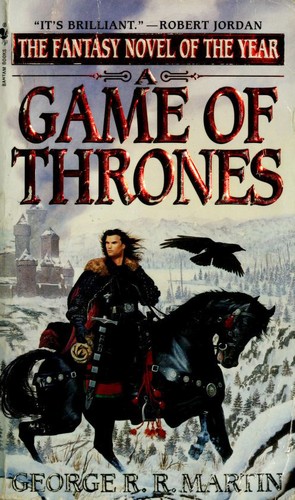
2. A Game of Thrones
by George R. R. Martin · 3.0(4 ratings)
Martin did something nobody had done before at this scale: he made fantasy feel politically real. The Starks and Lannisters operate like actual feudal families with actual competing interests, and the consequences of their decisions are brutal and permanent. If you are the kind of reader who got tired of chosen-one narratives where the hero always survives, this is the antidote. The caveat is that the series is unfinished and may never be completed. If that will haunt you, consider yourself warned. The first book stands alone better than people give it credit for, but the cliffhangers compound.
3. Name of the Wind
by Patrick Rothfuss · 4.6(5 ratings)
Rothfuss writes sentences that pause where you do not expect them to. The prose in this book is closer to literary fiction than anything else on this list, and Kvothe's voice, arrogant and unreliable and deeply specific, carries you through a story that is really about the gap between who we are and who we claim to be. This is for readers who care about how a story is told as much as what happens in it. The same caveat as Martin applies: the trilogy is unfinished. The second book also has a controversial middle section that divides readers sharply.
4. Way of Kings
by Brandon Sanderson · 4.0(5 ratings)
Sanderson builds magic systems the way engineers build bridges: every element has a function, every rule has a consequence, and the whole structure holds under pressure. The Stormlight Archive is his most ambitious project, and this first entry sets up a world shaped by cataclysmic storms where warfare, politics, and a very detailed system of magical armor intersect. If you like understanding exactly how the magic works and why it matters, nobody does it better. Skip if 1,000-page books intimidate you or if you prefer prose style over structural precision. Sanderson writes clearly, not beautifully, and some readers want both.

5. Wizard of Earthsea
by Ursula K. Le Guin · 4.5(4 ratings)
Published in 1968, and it still reads like nothing else. Le Guin wrote a coming-of-age story about a young wizard that is really about the cost of power, the danger of running from yourself, and what it means to name something truly. The prose is spare and precise in a way that modern fantasy almost never attempts. This is for readers who think 200 pages is enough to change your understanding of an entire genre. The book is short and quiet. If you need action set pieces or complex political intrigue, this will feel too small for you.
6. Mistborn
by Brandon Sanderson · 5.0(4 ratings)
What if the Dark Lord won? Sanderson starts from that premise and builds a heist story inside a world where ash falls from the sky and the oppressed population has spent a thousand years under divine tyranny. The magic system, Allomancy, where characters gain powers by ingesting and "burning" specific metals, is one of the most creative and internally consistent systems in the genre. This is a faster, tighter read than Stormlight and a better entry point for Sanderson newcomers. The characters are thinner than in his later work, and the dialogue can feel functional rather than natural.
7. Fifth Season
by N.K. Jemisin · 4.4(4 ratings)
Jemisin won the Hugo Award for Best Novel three years in a row with this trilogy. That had never happened before and has not happened since. The book is written partly in second person, which should not work but does. The world is one where catastrophic seismic events reshape civilization every few centuries, and the people who can control those events are enslaved for it. The anger in this book is real and specific, and it gives the fantasy a weight that genre fiction rarely achieves. Skip if experimental structure frustrates you. The second-person narration and nonlinear timeline are deliberate, but they demand patience.

8. Harry Potter and the Philosopher's Stone
by J. K. Rowling · 4.0(4 ratings)
No list of the best fantasy books can credibly exclude the series that turned an entire generation into readers. The first book is a tight, well-paced introduction to a world that millions of people grew up inside. Rowling's strength is plotting: every detail planted in book one pays off by book seven. The prose is simple and the early books are clearly aimed at children, which some adult readers find limiting. But the worldbuilding holds up remarkably well, and the series darkens and matures in a way that rewards rereading.
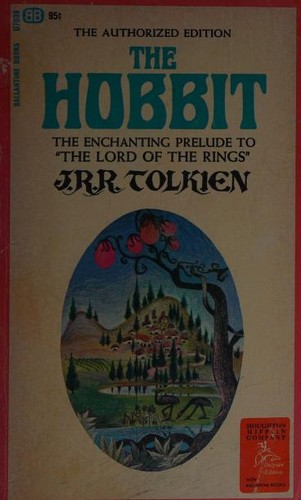
9. The Hobbit
by J.R.R. Tolkien · 4.3(5 ratings)
Lighter, funnier, and more accessible than its sequel. The Hobbit reads like a bedtime story told by someone who happens to be a genius philologist. Bilbo is not a hero. He is a comfortable person dragged out of his comfort zone, which is exactly why he is so easy to root for. If you bounced off The Lord of the Rings, try this first. It is shorter, warmer, and asks less of you. The tone shifts awkwardly toward the end as Tolkien pivots from children's adventure to something more serious, and the Battle of Five Armies is over before it really begins.
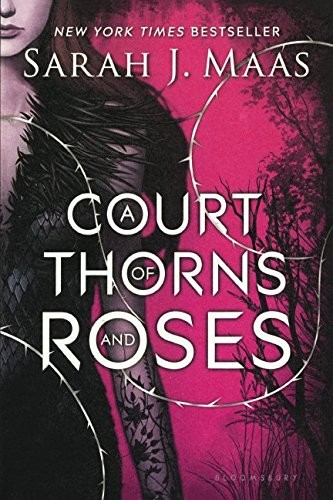
10. A Court of Thorns and Roses
by Sarah J. Maas · 4.6(4 ratings)
Maas is the most commercially successful fantasy author of the last five years, and this series is why. It starts as a Beauty and the Beast retelling and evolves into something much larger across subsequent books, blending fae politics, romance, and action in a way that appeals to readers who want emotional intensity alongside their worldbuilding. This is for readers who want to feel things first and think about magic systems second. The writing is not subtle, and the first book is the weakest entry in the series. Readers who stick with it through book two tend to become devoted.
11. The Lies of Locke Lamora
by Scott Lynch · 4.5(3 ratings)
A fantasy heist novel set in a city that feels like Renaissance Venice filtered through a con artist's imagination. Locke Lamora is a thief who is smarter than everyone in the room and constantly proves it, until someone smarter shows up. The dialogue is sharp and funny, the plotting is intricate, and the emotional stakes are higher than you expect from a book this entertaining. This is for readers who loved Ocean's Eleven and wished it had swordfights. The sequels are uneven and the series has stalled, so manage your expectations beyond book one.

12. Fourth Wing - The Empyrean #1
by Rebecca Yarros · 4.6(4 ratings)
The book that brought "romantasy" into the mainstream vocabulary. A war college where students ride dragons and die in training, a romance that burns slow before it burns fast, and a plot that moves at the speed of a falling body. Yarros writes action and tension extremely well, and the book is genuinely difficult to put down once it gets going. Newer release, still gathering reviews on the platform. Skip if you find the chosen-one love interest trope exhausting, or if you need your military worldbuilding to hold up under close scrutiny. The logistics of this war college do not entirely make sense, but most readers do not care.
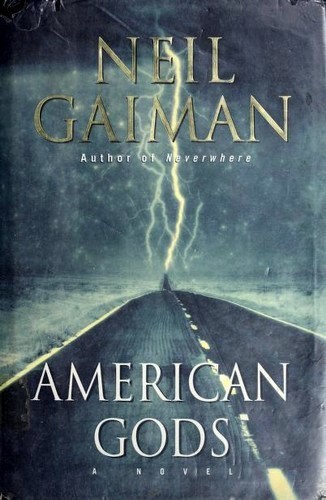
13. American Gods
by Neil Gaiman · 3.9(5 ratings)
Old gods from every mythology live in modern America, forgotten and diminished, while new gods of technology, media, and commerce rise to replace them. Gaiman's premise is one of the best in contemporary fantasy, and the road-trip structure gives the book a restless, lonely energy that fits the theme. The "Somewhere in America" interludes are often better than the main plot. This is for readers who like their fantasy grounded in real places, real mythologies, and real loneliness. The pacing drifts in the middle third, and the ending does not land for everyone. It is a book that is easier to admire than to love.

14. The Eye of the World
by Robert Jordan · 4.1(4 ratings)
The Wheel of Time is one of the longest and most ambitious fantasy series ever written, and this first entry is a deliberate echo of Tolkien that gradually becomes something entirely its own. Jordan's world is dense with history, prophecy, and cultures that feel lived-in. If you want to disappear into a series for months, this is where you start. The first 200 pages are slow and derivative on purpose. Jordan needed to bring Tolkien readers in before pulling the rug. If you can get past that opening stretch, the series opens up into something vast and rewarding. If you cannot, there is no shame in walking away early.

15. Color of Magic
by Terry Pratchett · 3.6(4 ratings)
Pratchett built a flat world on the back of four elephants standing on a giant turtle, and then used it to write some of the funniest and wisest books in the English language. The Color of Magic is the first Discworld novel, and while it is not his best work, it introduces a voice that is unlike anything else in fantasy. Pratchett wrote comedy that was also social commentary, and he did it without ever losing the jokes. Start here for the world, but know that the series gets dramatically better from book five onward. Guards! Guards! or Mort are stronger entry points if you want the best Pratchett first.

16. The Priory of the Orange Tree
by Samantha Shannon · 3.9(4 ratings)
A standalone fantasy in a genre dominated by series, which alone makes it worth noting. Shannon builds a world with multiple continents, dragon-riders, a matriarchal religion, and a centuries-old enemy, and resolves it all in one 800-page volume. The cast is diverse in every sense, and the book wears its politics openly without turning into a lecture. This is for readers who want scale without the ten-book commitment. The middle section sags under the weight of so many point-of-view characters, and some threads get less resolution than they deserve.

17. Blade Itself
by Joe Abercrombie0
Abercrombie writes fantasy for people who are tired of heroes. His characters are cynical, damaged, and often genuinely unpleasant, and yet you cannot stop reading about them. The First Law trilogy is dark fantasy at its most controlled, where every trope gets subverted and every noble gesture has a selfish motive underneath. The humor is bone-dry and the action scenes are visceral. Skip if you need someone to root for. Abercrombie's whole point is that heroism is a story people tell themselves, and some readers find that exhausting rather than refreshing.
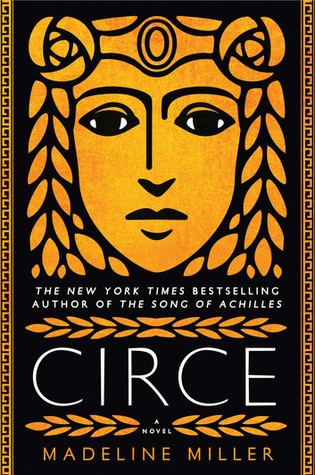
18. Circe
by Madeline Miller · 4.0(3 ratings)
Miller takes a minor figure from Greek mythology and turns her into one of the most fully realized characters in modern fantasy. Circe is a goddess who is not very good at being a goddess, and the book follows her across centuries as she finds power in herbalism, solitude, and stubbornness. The prose is controlled and beautiful without being showy, and the feminist reading of the myth feels earned rather than imposed. This is for readers who want fantasy rooted in real mythology and real emotion. It is quiet and interior. If you want battles and quests, look elsewhere on this list.

19. Assassin's Apprentice
by Robin Hobb · 4.3(4 ratings)
Hobb writes character interiority better than almost anyone in fantasy. Fitz, the royal bastard trained as an assassin, is one of those protagonists who gets under your skin because you feel everything he feels, including the parts that are frustrating and self-defeating. The pacing is slow and deliberate, and the payoffs are emotional rather than action-driven. This is for readers who want to know a character so well it almost hurts. Skip if slow burns frustrate you. Hobb takes her time, and some readers find Fitz's passivity maddening rather than moving. The series rewards patience enormously.

20. Night Circus
by Erin Morgenstern · 3.7(3 ratings)
A magical competition between two young illusionists plays out inside a black-and-white circus that only appears at night. Morgenstern writes atmosphere the way most authors write plot: layered, detailed, and intoxicating. The circus itself is the real main character, and the descriptions of its tents and attractions are so specific you can almost smell the caramel. This is for readers who want to be transported more than challenged. The plot is secondary to the setting, and the romance at the center is more aesthetic than emotional. If you need a strong narrative engine, the dreamlike pacing will test you.
Where to go from here
Twenty books is not enough to cover a genre this large. If you leaned toward the darker entries on this list, check out our Best Dark Fantasy Books post for more Abercrombie, Mark Lawrence, and Glen Cook. If Fourth Wing or A Court of Thorns and Roses clicked for you, we have a full Books Like A Court of Thorns and Roses list that goes deep on romantasy recommendations.
You can track which of these twenty you have already finished on your Booklogr shelf. Rate them, and your ratings feed directly into how we build lists like this one. The best fantasy books of all time are not decided by critics or publishers. They are decided by people who actually read them. That is you.
Related Books

Lord of the Rings
J.R.R. Tolkien

A Game of Thrones
George R. R. Martin

Name of the Wind
Patrick Rothfuss

Way of Kings
Brandon Sanderson

Wizard of Earthsea
Ursula K. Le Guin

Mistborn
Brandon Sanderson

Fifth Season
N.K. Jemisin

Harry Potter and the Philosopher's Stone
J. K. Rowling

The Hobbit
J.R.R. Tolkien

A Court of Thorns and Roses
Sarah J. Maas

The Lies of Locke Lamora
Scott Lynch

Fourth Wing - The Empyrean #1
Rebecca Yarros

American Gods
Neil Gaiman

The Eye of the World
Robert Jordan

Color of Magic
Terry Pratchett

The Priory of the Orange Tree
Samantha Shannon

Blade Itself
Joe Abercrombie

Circe
Madeline Miller

Assassin's Apprentice
Robin Hobb

Night Circus
Erin Morgenstern